
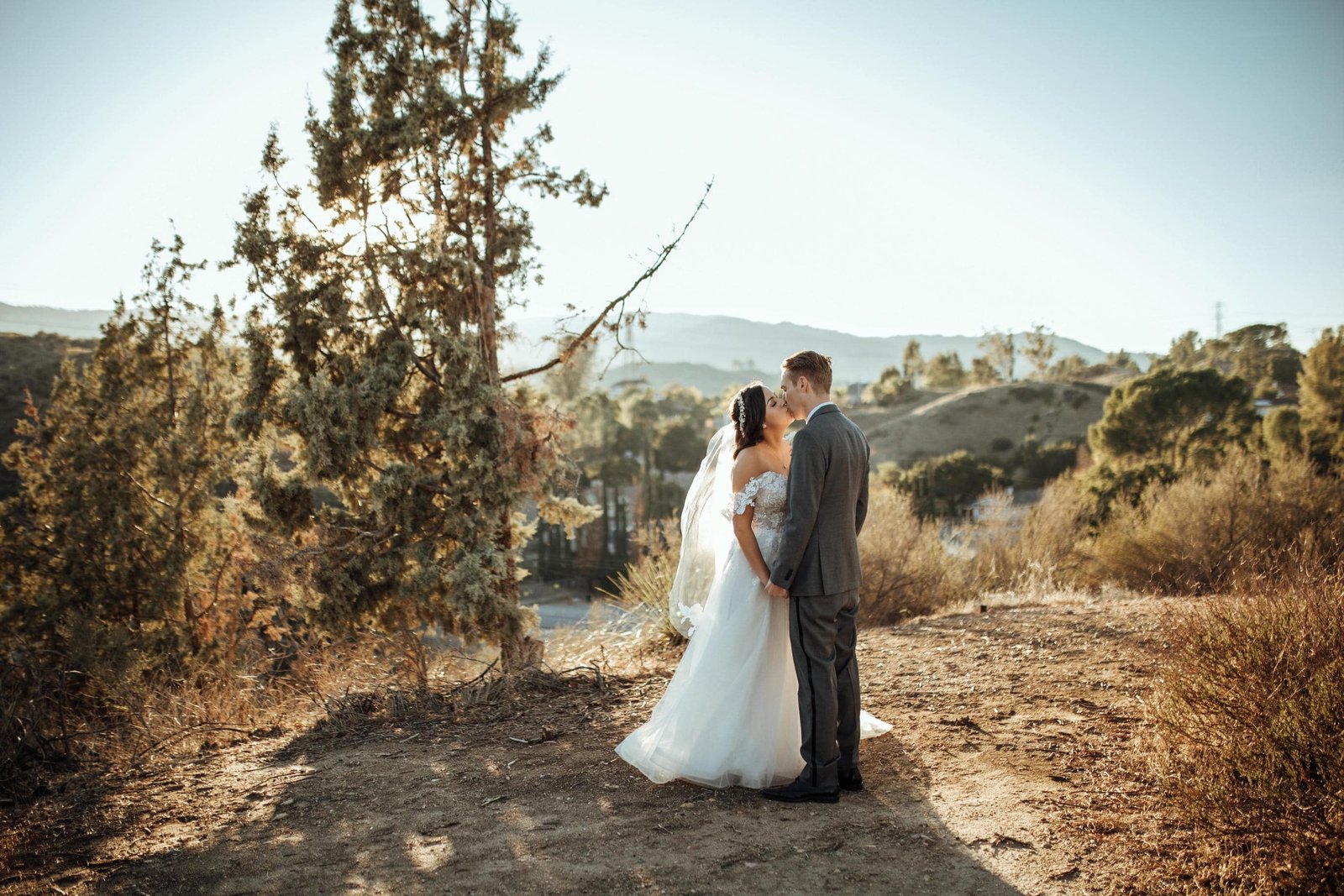
We're Chris and Naomi, a married photo and film team based an hour north in Temecula. San Diego is one of our favorite places to shoot, from the coast all the way inland. Collections start at $2,497.
The marine layer is the whole story
San Diego light is not Temecula light. If you've only planned around inland weather, this is the part that catches people out.
The difference is the marine layer. A low bank of coastal cloud that sits over the county through late spring and early summer and burns off at some point in the morning. Or doesn't.
Locals call the worst of it May Grey and June Gloom. The names are affectionate. The effect on your wedding day is real. A coastal ceremony at eleven in June can happen under flat grey cloud while somewhere ten miles inland is in full sun.
Here's the good news. Photographically it's not a disaster at all. Overcast is the softest, most forgiving light there is and skin tones under a marine layer are lovely. It just means that if your heart is set on hard golden light over the water, a June morning at the coast is the least likely time to get it.
So at the coast, put your portraits at the back end of the day. The layer usually thins as the afternoon goes on, and that last hour before sunset over the Pacific is the reason people get married here. Inland, through Escondido, Ramona and Fallbrook, the layer barely matters and the day behaves a lot more like a wine country wedding.
Coast, garden and city all shoot differently
San Diego is really three wedding counties wearing one name.
Coastal and beach weddings live and die on timing and permits. Public beaches and a lot of the clifftop parks need a permit for a ceremony, and the rules change city to city and park to park. Your venue or planner usually handles it. Confirm it rather than assume it, because a permit problem is one of the very few things that can actually stop a wedding.
Garden and estate weddings through the inland valleys are the most forgiving. There's shade, there's room, and there's usually somewhere to put a first look that doesn't involve a half mile walk.
City weddings, downtown and in the hotel ballrooms, are where a second set of hands earns its keep. The light is artificial and mixed, the spaces are tight, and the only way to get a clean wide of your reception room is to shoot it before anyone's in it.
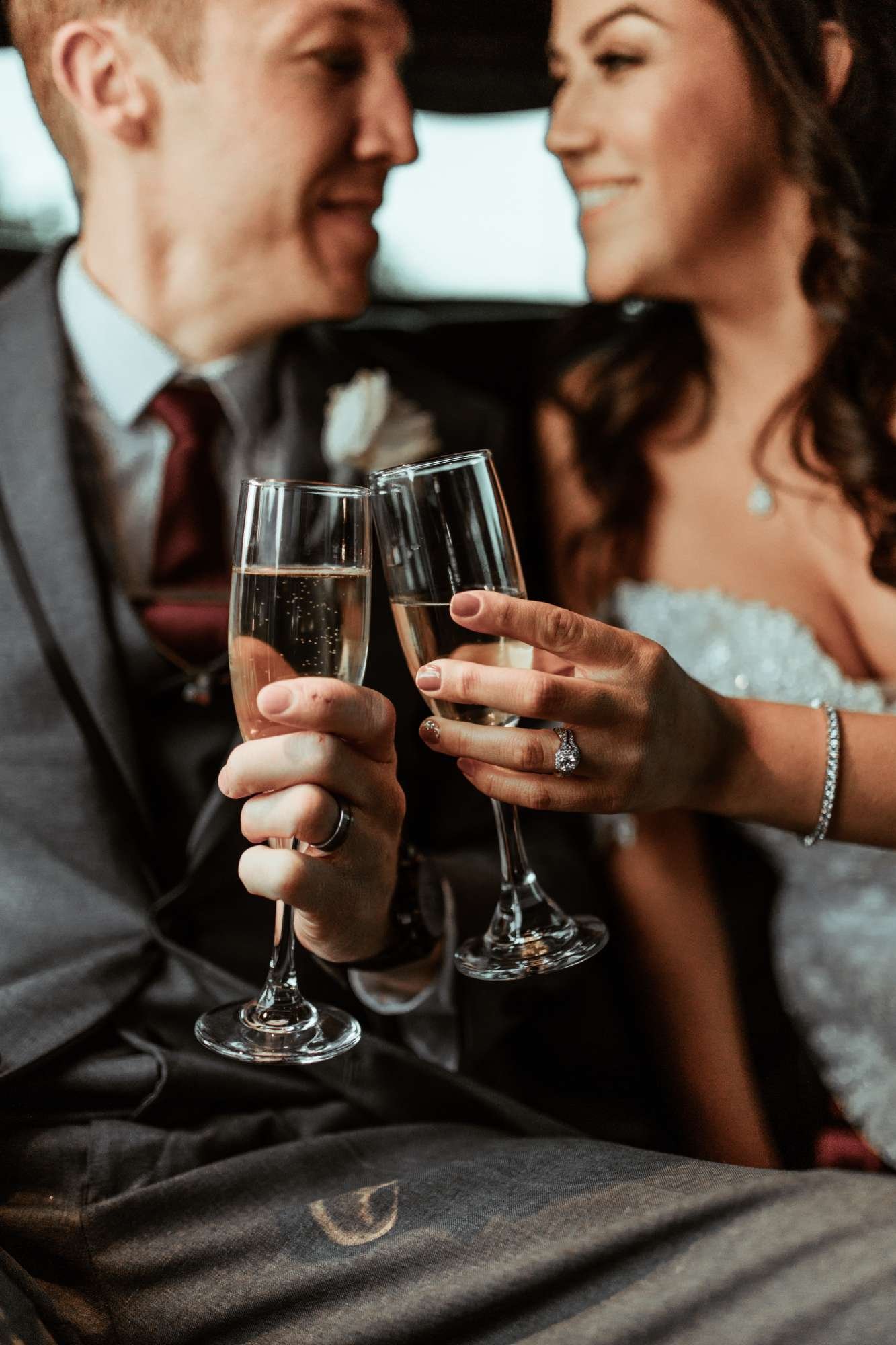
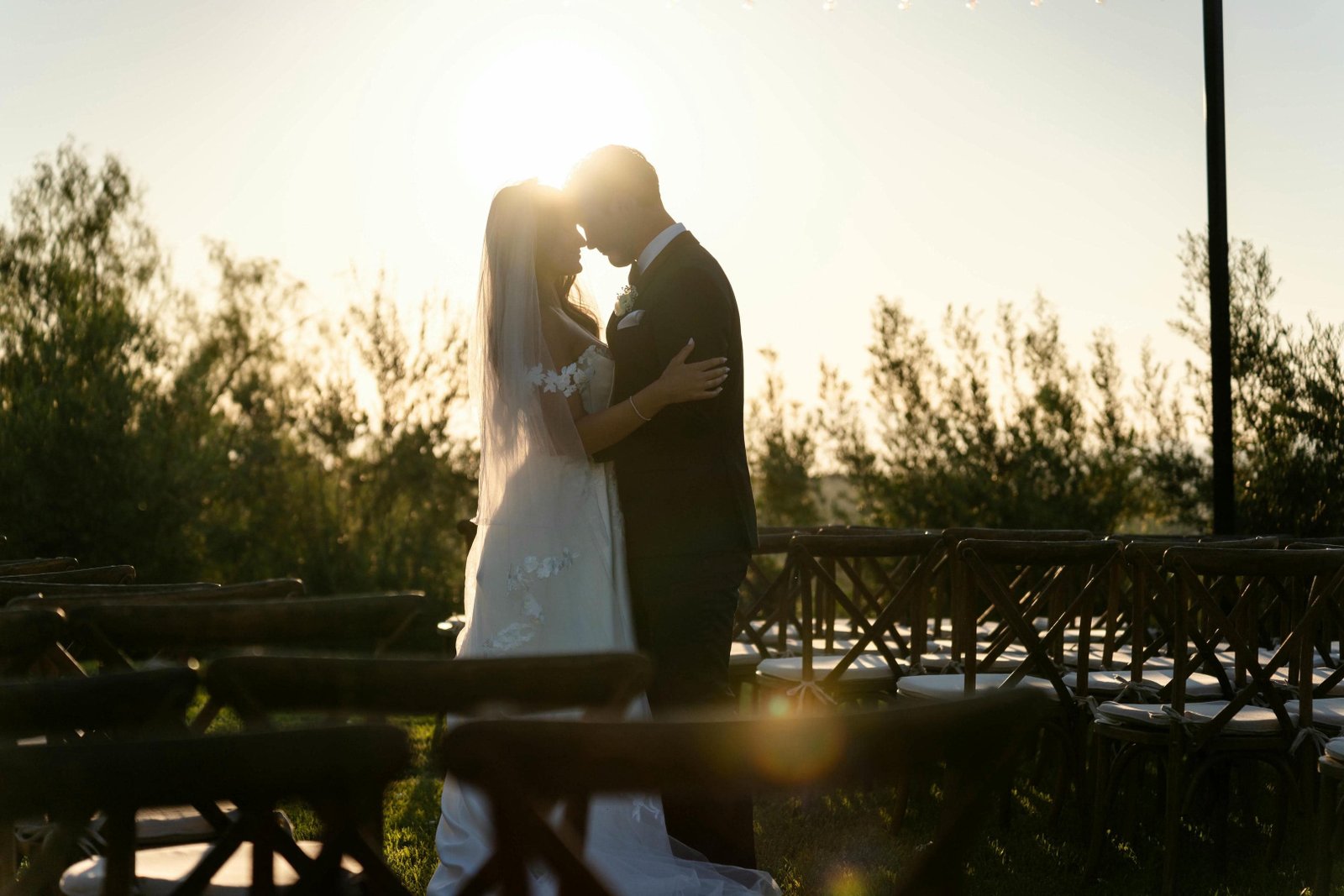
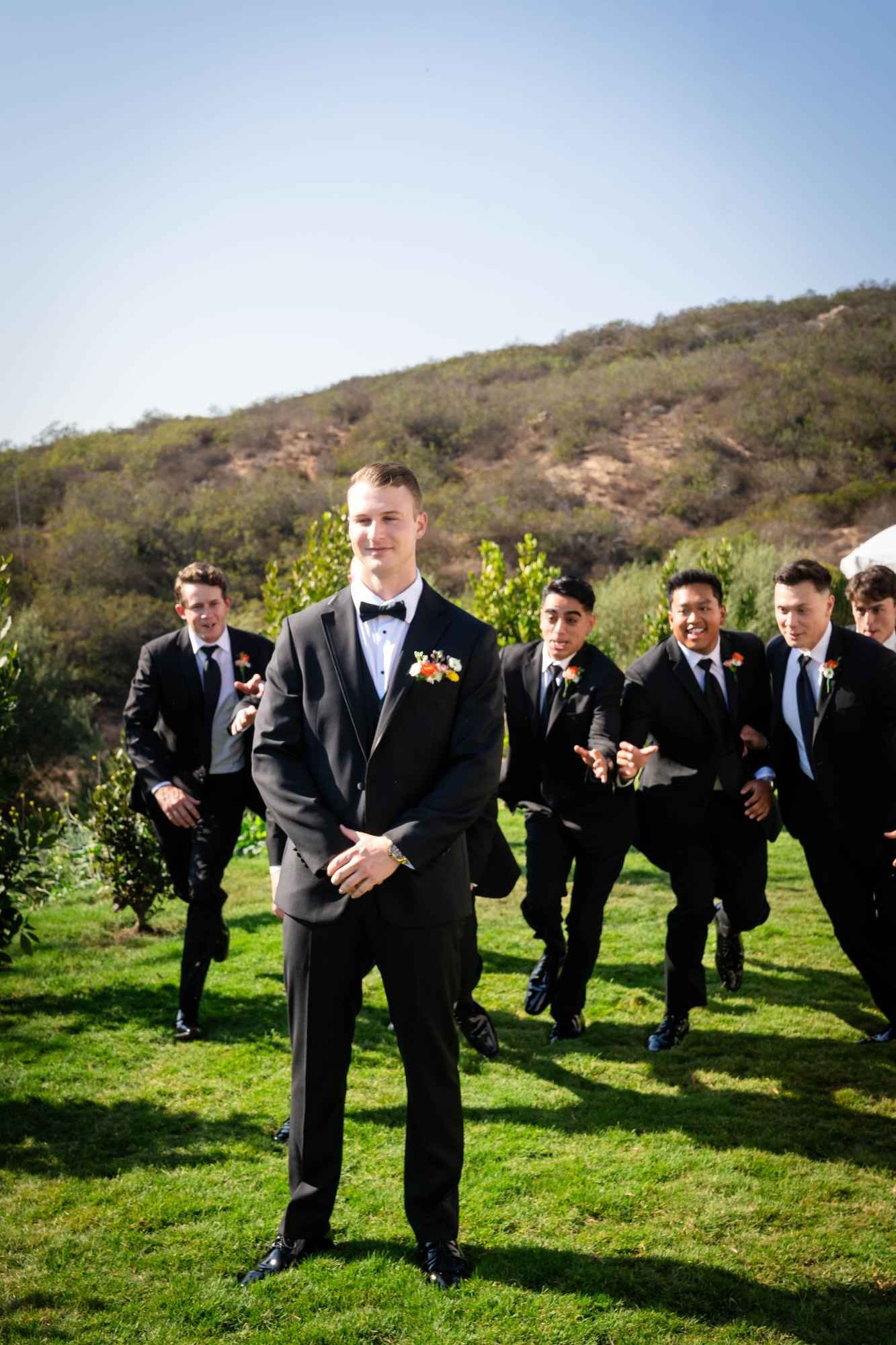
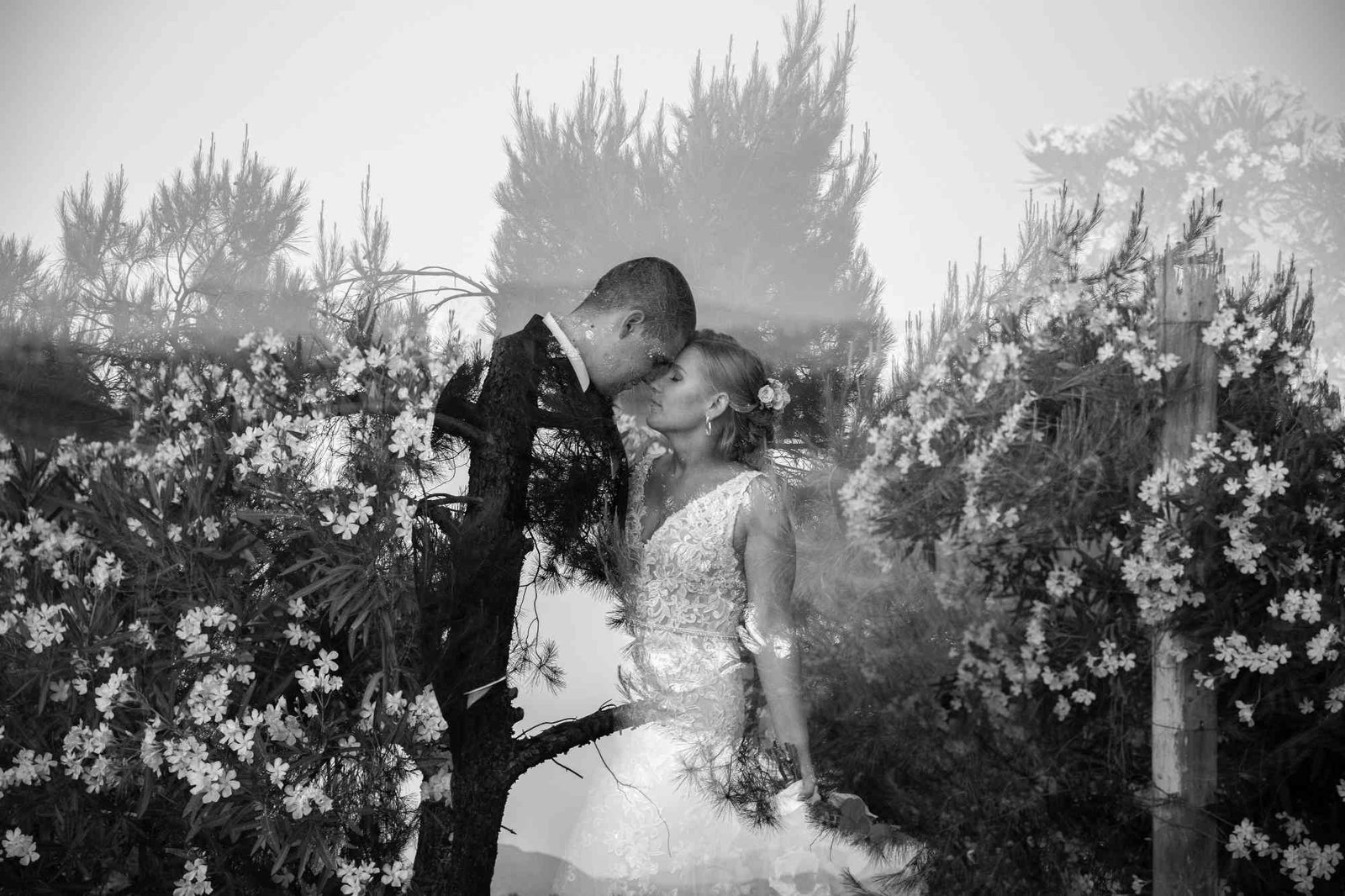
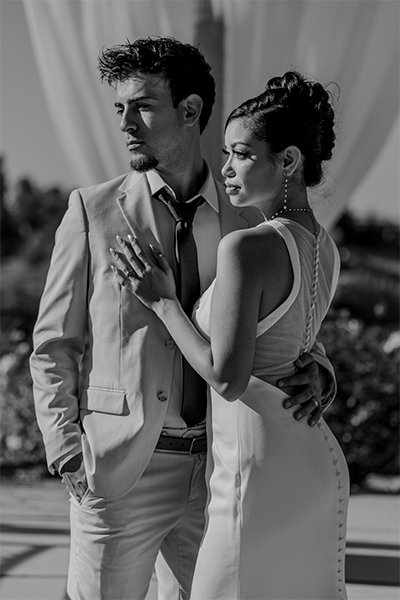
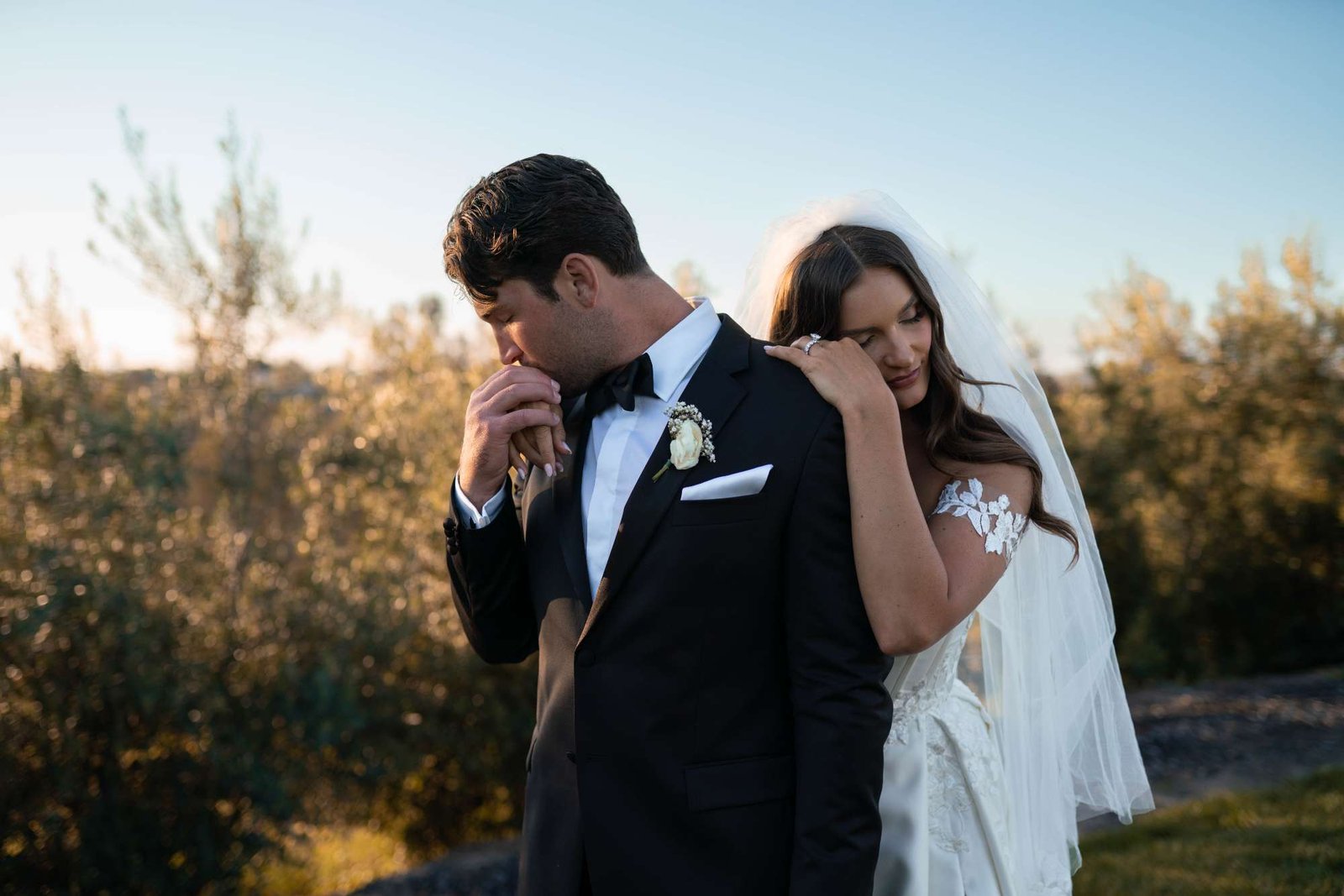
Photographs by Naomi and Chris of Weddings by Him and Her. Every image on this page is our own work.
Building the timeline
Work backwards from sunset. That one habit fixes most wedding timelines, and it matters more here than anywhere because your best light and your ceremony are competing for the same hour.
Doing a first look? The day gets dramatically easier. Portraits and wedding party photos happen before the ceremony, so the hour afterward belongs to you and your guests instead of a photo list. And if the marine layer hasn't lifted, you've still got the whole evening in reserve.
Not doing a first look? Plenty of good reasons not to. Just make the ceremony early enough to leave a real gap before sunset. Five o'clock in June is comfortable. Five o'clock in November is not, and you'll lose the light before cocktail hour ends.
One more San Diego thing. If your ceremony and reception are in different places, be honest about the transfer. Coastal roads on a summer Saturday do not move at the speed the map thinks they do.
Where we shoot across the county
The coast, from Oceanside and Carlsbad down through Encinitas, Del Mar, La Jolla and around to Coronado and Point Loma. That's where most people picture a San Diego wedding, and where permits and tides need checking.
North county inland, through Escondido, San Marcos, Rancho Santa Fe, Fallbrook and Ramona, has the estate, ranch and garden venues. It behaves a lot more like Temecula than like the coast, which suits us, since it's half the drive.
Downtown and the urban venues, through the Gaslamp, Little Italy, Balboa Park and the hotels. Tightest spaces, most mixed light, and where having two of us pays for itself.
We also shoot Orange County, Los Angeles, Palm Springs and destination weddings. If yours is somewhere else entirely, ask us.
Questions couples ask us
Do you travel to San Diego?
All the time. We're in Temecula, about an hour from most of the county. Ask us about travel when you enquire and we'll be straight with you.
How much does a San Diego wedding photographer cost?
Ours start at $2,497. San Diego generally runs a little above inland Riverside County, with experienced full day photographers commonly between $3,000 and $8,000.
Do we need a permit for a beach ceremony?
Usually yes for a formal ceremony on a public beach or in a clifftop park, and the rules vary by city and park. Your venue or planner normally handles it. Confirm it rather than assume it.
What if it's grey on our wedding day?
Honestly, it's fine. A marine layer is the softest light there is and skin tones under it are beautiful. We plan portraits for later in the day when it usually thins, and if it doesn't, we shoot the grey happily.
Do you shoot outside San Diego?
Yes. Temecula Valley, Orange County, Los Angeles, Palm Springs, and destination weddings.
Can we book photo and video together?
Yes, and it costs less than hiring two companies, because it's the same two people either way.
Is your date open?
Tell us your date and your venue and we will come back to you quickly. We are booking 2026 and 2027 weddings right now.
Check your dateSee collections